
HARAV BARUCH ROSENBLUM — Ha'azini - Shabbos Tshuva (2026-09-14)
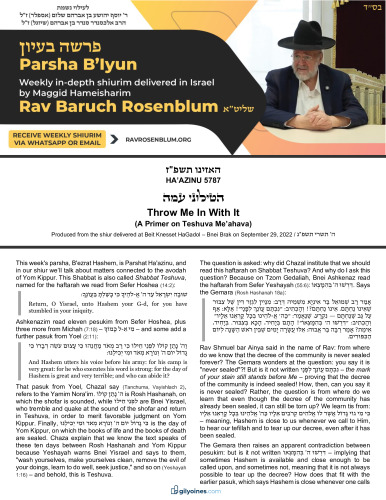
האזינו תשפ"ז
HA’AZINU 5787
ּהַטִּּילוּנִּי עִּמָּּה
Throw Me In With It
(A Primer on Teshuva Me’ahava)
Produced from the shiur delivered at Beit Knesset HaGadol – Bnei Brak on September 29, 2022 / ה' תשרי תשפ"ג
This week's parsha, B'ezrat Hashem, is Parshat Ha'azinu, and The question is asked: why did Chazal institute that we should
in our shiur we’ll talk about matters connected to the avodah read this haftarah on Shabbat Teshuva? And why do I ask this
of Yom Kippur. This Shabbat is also called Shabbat Teshuva, question? Because on Tzom Gedaliah, Bnei Ashkenaz read
named for the haftarah we read from Sefer Hoshea (14:2): the haftarah from Sefer Yeshayah (55:6): דּ ְׂר ׁש ּו ה' ְׂ ּב ִה ּ ָמצְׂ א ֹו.ִ Says
:ָשלְׂ ּ ָת ּ ַב ֲע ֹונ ֶָך ָ ֶל ֹה-ִש ָראֵ ל עַ ד ה' א
ַ ׁ יך ִּכי כ ְׂ ׁשוּבָ ה י the Gemara (Rosh Hashanah 18a):
Return, O Yisrael, unto Hashem your G-d, for you have ִמ ּ ַנ ִיין לִ גְׂ זַר ִדּ ין ׁ ֶשל צִ בּ וּר:יה ְׂדּ ַרב ּ אָ ַמר ַרב ׁ ְׂשמוּאֵ ל ּ ַבר ִאינְׂ יָא ִמ ׁ ּ ְׂש ֵמ
stumbled in your iniquity. אַ ף: ״נִ כְׂ ּ ַתם ֲע ֹונ ְֵׂך לְׂ פָ נַי״! אֶ לּ ָא: אֵ ינ ֹו נ ְֶׂח ּ ָתם?! וְׂ הָ כְׂ ִתיב.ׁ ֶשאֵ ינ ֹו נ ְֶׂח ּ ָתם
ל ֹהֵ ינ ּו ְׂ ּבכׇ ל ׇק ְׂראֵ נ ּו אֵ לָיו״-״כה׳ א ַ ּ : ׁ ֶש ּנֶא ַמר,עַ ל ּגַב ׁ ֶש ּנ ְֶׂח ּ ָתם — נִ ְׂק ָרע
Ashkenazim read eleven pesukim from Sefer Hoshea, plus , ְׂ ּבי ִָחיד. הָ כָא ְׂ ּבצִ בּ וּר,״דּ ְׂר ׁש ּו ה׳ ְׂ ּב ִה ּ ָמצְׂ אוֹ״! הָ ָתם ְׂ ּבי ִָחיד ִ :וְׂ הָ כְׂ ִתיב
three more from Michah (7:18) – ֹך ָ ל ּכָמו- ֵ – ִמי אand some add a שנָה לְׂ יוֹם ָ ּ ׁ ַֹאש ה
ׁ ֲש ָרה י ִָמים ׁ ֶש ֵּבין ר ָ אֵ לּ ּו ע:ימת? אָ ַמר ַר ּ ָבה ּ ַבר אֲ בו ּּה ַ ֵא
further pasuk from Yoel (2:11): .הַ ִּכ ּפו ִּרים
וַה' נ ַָתן קוֹל ֹו לִ פְׂ נֵי ֵחיל ֹו ִּכי ַרב ְׂמאֹד ַמחֲ נֵה ּו ִּכי עָ צוּם ע ֵֹשה ְׂדבָ ר ֹו ִּכי Rav Shmuel bar Ainya said in the name of Rav: from where
:גָדוֹל יוֹם ה' וְׂ נו ָֹרא ְׂמאֹד ו ִּמי יְׂכִ י ֶל ּנ ּו do we know that the decree of the community is never sealed
And Hashem utters his voice before his army: for his camp is forever? The Gemara wonders at the question: you say it is
very great: for he who executes his word is strong: for the day of "never sealed"?! But is it not written – נִ כְׂ ּ ָתם ֲע ֹונ ְֵׂך לְׂ פָ נָיthe mark
Hashem is great and very terrible; and who can abide it? of your stain still stands before Me – proving that the decree
That pasuk from Yoel, Chazal say (Tanchuma, Vayishlach 2), of the community is indeed sealed! How, then, can you say it
refers to the Yamim Nora'im. ה' נ ַָתן קוֹל ֹוis Rosh Hashanah, on is never sealed? Rather, the question is from where do we
which the shofar is sounded, while לִ פְׂ נֵי ֵחיל ֹוare Bnei Yisrael, learn that even though the decree of the community has
who tremble and quake at the sound of the shofar and return already been sealed, it can still be torn up? We learn tis from:
in Teshuva, in order to merit favorable judgment on Yom ִּכי ִמי גוֹי ּגָדוֹל אֲ ׁ ֶשר ל ֹו אל ִֹהים ְׂקר ִֹבים אֵ לָיו ּ ַכה' אל ֹהֵ ינ ּו ְׂ ּבכָל ָק ְׂראֵ נ ּו אֵ לָיו
Kippur. Finally, ִּכי גָדוֹל יוֹם ה' וְׂ נו ָֹרא ְׂמאֹד ו ִּמי יְׂכִ י ֶל ּנ ּוis the day of – meaning, Hashem is close to us whenever we call to Him,
Yom Kippur, on which the books of life and the books of death to hear our tefillah and to tear up our decree, even after it has
are sealed. Chaza explain that we know the text speaks of been sealed.
these ten days between Rosh Hashanah and Yom Kippur The Gemara then raises an apparent contradiction between
because Yeshayah warns Bnei Yisrael and says to them, pesukim: but is it not written – ִדּ ְׂר ׁש ּו ה' ְׂ ּב ִה ּ ָמצְׂ א ֹוimplying that
"wash yourselves, make yourselves clean, remove the evil of sometimes Hashem is available and close enough to be
your doings, learn to do well, seek justice," and so on (Yeshayah called upon, and sometimes not, meaning that it is not always
1:16) – and behold, this is Teshuva. possible to tear up the decree? How does that fit with the
earlier pasuk, which says Hashem is close whenever one calls
out to Him? The Gemara answers: there, in the first pasuk time when they are not doing the will of Hakadosh Baruch Hu
of – ִדּ ְׂר ׁש ּו ה' ְׂ ּב ִה ּ ָמצְׂ א ֹוseek Hashem while He is to be found, it – following the view of Rabbi Meir, and not that of Rabbi
speaks of an individual, who cannot tear up an evil decree Yehuda; for each corner has eight strings and five knots,
except at the time when Hashem is available and close for corresponding to the numerical value of ( אֶ חָ ד13), and four
him to call upon; while in the pasuk of כי ִמי גוֹי ּגָדוֹל, ִּ it speaks times אֶ חָ דequals ( ֶּבן52). And with tzitzit, a person places two
of the community, which can return in Teshuva and nullify an in front and two behind, to hint that whether one walks forward
evil decree at any time and every time. As for the individual, or backward, he is still called a son to Hakadosh Baruch Hu.
when is the time Hakadosh Baruch Hu is available and close And since Yisrael retain the status of ּ ָבנִ יםeven when not
to him to call upon and be answered, so that his decree may doing the will of Hakadosh Baruch Hu, one must conclude that
be torn up? It is during the ten days between Rosh Hashanah their sins are forgiven, for a father who forgoes his own honor,
and Yom Kippur – the Aseret Yemei Teshuva. his honor is indeed forgone, and presumably Hakadosh
Another Gemara, in Masechet Yevamot (49b), comes and Baruch Hu forgives them; and from this arose the obligation
brings a chilling story. Menashe put his grandfather, upon Yeshayah HaNavi for having called them "a people of
Yeshayah HaNavi, on trial as a false prophet and had him unclean lips." And even though he was scorched on his lip for
killed, arguing three contradictions between Yeshayah's it, he was still not saved from the punishment, until Menashe
prophecies and the Torah. Firstly, that Yeshayah claimed to came and brought about his death through a false accusation,
have seen Hashem – שא ָ ּ ִ וָאֶ ְׂראֶ ה אֶ ת ה' י ׁ ֵֹשב עַ ל ִּכ ּ ֵסא ָרם וְׂ נ, and I on account of words he had spoken in prophecy. This cause
saw Hashem sitting on a high and exalted throne, despite the of his death came about through the tzitzit, which revealed his
Torah stating ל ֹא י ְִׂראַ נִ י הָ אָ ָדם וָחָ י, no man shall see Me and live. location and led to his being killed, for each person is judged
Secondly, that דּ ְׂר ׁש ּו ה' ְׂ ּב ִה ּ ָמצְׂ א ֹו,ִ seek Hashem while He is to according to the measure of his own righteousness and
be found, implied Hashem isn't always available to hear stature, and that is why, when the saw reached his mouth, his
tefillah, which runs against the Torah's assurance to us that soul departed on its own, in the manner of the passing of
ל ֹהֵ ינ ּו ְׂ ּבכָל ָק ְׂראֵ נ ּו אֵ לָיו-כה' א, ַ ּ Hashem our G-d is close to us tzaddikim, whose souls depart of themselves, "like a hair
whenever we call to Him. Finally, that Yeshayahu HaNavi drawn from milk," and not through the iron blade of the saw
promised Chizkiyahu's father fifteen added years to his life – itself; and once his soul had left his body, his concealment
שנָה ָ ׁ יך חֲ ֵמ ׁש עֶ ְׂש ֵרה ָ וְׂ הֹסַ פְׂ ִּתי עַ ל י ֶָמ, and I will add fifteen years to was automatically undone, and he became visible to all, and
your days – which runs counter to the Torah's statement of they buried him with honor. These are the words of the Ben
ָ אֶ ת ִמ ְׂס ּ ַפר י ֶָמ, I will fill the number of your days, implying
יך אֲ ַמלּ ֵא Yehoyada.
that no days are ever added beyond what was decreed at If so, we have learned that in these days between Rosh
birth. Hashanah and Yom Kippur, Hakadosh Baruch Hu is
Knowing Menashe wouldn't accept any answer, and that especially close to us, and this carries implications.
responding would only make Menashe a willful murderer, the Chazal say (Pirkei D'Rabbi Eliezer, 46):
Navi Yeshayah chose silence; he uttered a holy Name and ִרבּ וֹנ ֹו: אָ ַמר לְׂ פָ נָיו,ָראָ ה סָ ָמאֵ ל ׁ ֶשלּ ֹא נִ ְׂמצָא בָ הֶ ם ֵח ְׂטא ְׂ ּביוֹם הַ ִּכ ּפו ִּרים
was swallowed into a cedar tree. Menashe's men found the ַמה ּ ַמלְׂ אֲ כֵ י.ש ַמ ִים ָ ּ ׁ ַ י ֵׁש לְׂ ָך עַ ם אֶ חָ ד ּ ָבאָ ֶרץ ְּׂכ ַמלְׂ אֲ כֵ י ה,ׁ ֶשל ע ֹולָם
ָ ּ ׁ ש ֵרת ּ ַב
tree and sawed through it; when the blade reached his mouth, ּכ ְָׂך ִי ְׂש ָראֵ ל עו ְֹׂמ ִדים עַ ל ַרגְׂ לֵיהֶ ם ְׂ ּביוֹם,ש ֵרת אֵ ין לָהֶ ם ְׂקפִ יצִ ין ָ ּ ׁ ַה
Yeshayah's soul departed, midah k'neged midah for having ִש ָראֵ ל אֵ ין ְׂ ּכ ְָׂך י,ִש ָראֵ ל אֵ ין לָהֶ ם אֲ כִ ילָה ו ׁ ְּׂש ִת ּיָה ְׂ הַ ִּכ ּפו ִּרים; ַמה ּ ַמלְׂ אֲ כֵ י י
once called Yisrael – עַ ם ְׂט ֵמא ְׂשפָ ַת ִיםa people of unclean lips, ש ֵרת נְׂ ִק ִ ּיים ִמ ּכָל ָ ּ ׁ ַלָהֶ ם אֲ כִ ילָה ו ׁ ְּׂש ִת ּיָה ְׂ ּביוֹם הַ ִּכ ּפו ִּרים; ַמה ּ ַמלְׂ אֲ כֵ י ה
in his opening vision. This is what is brought by the Gemara. ש ֵרת ָ ּ ׁ ִַש ָראֵ ל נְׂ ִק ִ ּיים ִמ ּכָל ֵח ְׂטא ְׂ ּביוֹם הַ ִּכ ּפו ִּרים; ַמה ּ ַמלְׂ אֲ כֵ י ה ְׂ ּכ ְָׂך י,ֵח ְׂטא
The question is asked, if Yeshayah was swallowed inside the .שלוֹם ְׂמ ַת ֵ ּו ְׂך ֵּבינֵיהֶ ם ְׂ ּביוֹם הַ ִּכ ּפו ִּרים ָ ׁ ִש ָראֵ ל ְׂ ּכ ְָׂך י,שלוֹם ְׂמ ַת ֵ ּו ְׂך ֵּבינֵיהֶ ם ָׁ
ִש ָראֵ ל ִמן הַ ָּק ֵטיגוֹר ׁ ֶשלּ ָהֶ ם ְׂ וְׂ הַ ָּקדו ֹׁש ּ ָברו ְּׂך הוּא ׁשו ֵֹמעַ ע ֲִתירו ָֹתן ׁ ֶשל י
tree, how exactly did Menashe discover him?! Says the
,ו ְּׂמכַ ּ ֵפר עַ ל הַ ִּמזְׂ ֵּבחַ וְׂ עַ ל הַ כּ ֹהֲ נִ ים וְׂ עַ ל ּכָל עַ ם הַ ָּקהָ ל לְׂ ִמ ּגָדוֹל וְׂ עַ ד ָקטָ ן
Yerushalmi (Sanhedrin, 10), when Menashe arose some time
.ׁ ֶש ּנֶא ַמר ״וְׂ כִ ּ ֶפר אֶ ת ִמ ְׂקדַּ ׁש הַ ּק ֶֹד ׁש״
later and had become king, ְׂש ְׂעיָה ַ ׁ – הוֹה ּ ָפ ֵרי חו ֵֹרי יhe was
pursuing after Yeshayah and wanted to kill him, and Sammael [the Satan] saw that sin was not to be found among
Yeshayah fled from before him; he fled into a cedar tree, but them on the Day of Atonement. He said before Hakadosh
Baruch Hu: Ribbono Shel Olam! You have one people like the
his tzitzit stuck out and did not get swallowed by the tree. They
ministering angels who are in heaven. Just as the ministering
came and told this to Menashe, who instructed them to pick
angels have bare feet, so does Yisrael bare feet on Yom Kippur.
up saws and cut the tree to pieces. As they sawed the cedar, Just as the ministering angels have neither food nor drink, so
blood was seen flowing, and of this it is said: Yisrael have neither food nor drink on Yom Kippur. Just as the
'ּש ִ ַלם דָּ ם נ ִָקי וְׂ ל ֹא־אָ בָ ה ה ַ שפָ ְׂך ַוי
ָ ׁ ְׂמלּ ֵא אֶ ת־יְׂרו ָ ׁ וְׂ גַם דַּ ם־הַ ּנ ִָקי אֲ ׁ ֶשר ministering angels have no joints, likewise Yisrael stand upon
לִ ְׂסל ֹחַ ׃ their feet. Just as the ministering angels have peace obtaining
amongst them, so Yisrael have peace amongst them on Yom
And also for the innocent blood that he shed: for he filled
Kippur. Just as the ministering angels are innocent of all sin on
Yerushalayim with innocent blood; which Hashem would not
Yom Kippur, so Yisrael are innocent of all sin on Yom Kippur.
pardon.
Hakadosh Baruch Hu hears the prayers of Yisrael rather than
Why specifically did the tzitzit stick out? Couldn't his shtreimel the charges brought by their accuser, and He makes atonement
have stuck out instead?! Writes the Ben Yehoyada1, tzitzit for the altar, and for the Mikdash, and for the Kohanim, and for
indicate that Yisrael retain the status of ( ּ ָבנִ יםsons) even at a all the people of the congregation both great and small.
~2~
The Agra D’Pirka2 comes and says something wonderful on should try to go without shoes. No Crocs – only socks! In order
this. The Maharam Chagiz3, in his sefer Mishnat to draw from the kedushah that descends to us on Yom
Chachamim, brings in the name of the ba'alei remez that the Kippur.
matter of wearing shoes is so that one's flesh not touch the Returning to the week’s Haftarah and that of our public fast
ground directly, since the ground was cursed on account of days, the question is asked – why don't we read, this Shabbat,
man's sin (in Gan Eden), and so a barrier is made between the haftarah from Yeshayah of ?דּ ְׂר ׁש ּו ה' ְׂ ּב ִה ּ ָמצְׂ א ֹו
ִ Where did the
the foot and the ground. And he writes that for this reason, in Navi Hoshea come from?
a place of holy ground, where the ground has emerged from
the category of "cursed" into the category of "blessed," one The Midrash (Bereishit Rabbah, 84:19) says on the pasuk of
should go barefoot – and this is the meaning of wht was Reuven returning to the pit in which his brother Yosef was
instructed to Moshe Rabbeinu at the burning bush: Remove ָ ׁ – ַו ּיwhere had he been and where
placed – ָשב ְׂראוּבֵ ן אֶ ל הַ בּ וֹר
your shoes, for the place upon which you stand is holy ground. is he returning from? The Midrash presents two opinions:
And with this we find a fine reason for what Chazal said Rabbi Eliezer says he was occupied with his sackcloth and
(Shabbat 129) that a person should sell all he has and acquire fasting, and when he was free from that, he went and looked
shoes for his feet. Since the barrier exists to interrupt the into that pit. Hakadosh Baruch Hu said to him: Never has a
curse, one should sell all he has to acquire shoes; and that is person sinned before Me and done Teshuva, and you were
why the bracha recited over shoes is שה לִ י ּכָל־צ ְָׂר ִּכי
ָ ָ – ׁ ֶשעwho the first to initiate Teshuva – by your life, a descendant of your
has made for me all I need, for this is indeed one's full need: descendants shall arise and be the first to initiate Teshuva!
And who is that? Hoshea, as it says: יך ָ ֶל ֹה-ִש ָראֵ ל עַ ד ה' א
ְׂ שוּבָ ה י.ׁ
to want the blessing, and to interrupt the curse. And in this we
find, quite plainly, a reason why on the holy day of Yom Another Midrash on the pasuk ִש ַמע ְׂראוּבֵ ן ַו ַּי ִ ּצלֵה ּו ִמ ּי ָָדם
ְׂ ׁ – ַו ּי
Kippur, wearing shoes is forbidden; for the land has been Reuven heard and rescued him from their hands. Chazal say
sanctified with the sanctity of the day, and emerges then from (Midrash HaGadol), the ֹחן לְׂ בָ בוֹת
ֵ ( בּ וExaminer of Hearts) said to
curse into blessing.i him: Since you began to return a lost child to his father, from
Writes Rav Chaim Palagi4 in Moed L’Kol Chai, at the close your descendants I will raise up one who restores Yisrael to
of Yom Kippur, one should not rush the chazzan to hurry the good – and who is that? Hoshea ben Be'eri.
along, for it would be proper for us to ask that the hours be Further, Chazal say (Pesikta Rabbati) Reuven came and looked
extended many times over, since we are attached to down into the pit, and behold, Yosef was not there. Hakadosh
Hakadosh Baruch Hu in kedushah and taharah, and to daven Baruch Hu said to him: Reuven, you sought to return Yosef
and plead before Him at such a time of favor – so why would the beloved son to his father, by your life, so shall a
anyone want to cast away a time and moment of favor that is descendant of your descendants return Yisrael in complete
not found, and will not be found, on any other day of the year?! Teshuva to their Father in Heaven. And who is that? Hoshea
He adds: As for myself, were it not that I must listen to others, ben Be'eri.
I would not budge from the shul after the close of Yom Kippur Brought in Ramazei Rabbeinu Yoel5 – Reuven merited that
until two or three hours into the night, to converse and to pour Hoshea ben Be'eri, who proclaimed Teshuva to Yisrael,
out our supplications before our G-d, for a person will surely descended from him, as it is stated יך ָ ֶל ֹה-ִש ָראֵ ל עַ ד ה' א
ְׂ ׁשוּבָ ה י
not find another moment of favor like this one. and this is "to return him to his father" – meaning, his Father
Rav Chaim Palagi tells us: you have gotten through Yom in Heaven.
Kippur pure and clean – do not run home after Maariv of Yom The Midrash says (Bereishit Rabbah, 82:11), Reuven was firstborn
Kippur. Stay another five minutes in the shul and ask the Borei in conception, firstborn in birth, firstborn in the right of the
Olam: "Ribbono Shel Olam, send us Mashiach Tzidkeinu! bechor, firstborn in inheritance, firstborn in avodah, and
Build us the Beit Hamikdash!" firstborn in Teshuva. Rabbi Azaryah said: also firstborn in
There is one place in the world where people do not walk with ֵ ׁ ת ִחלּ ַת ִדּ ֶּבר ה' ְׂ ּבהו.
nevuah (prophecy), as it is stated: ַֹשע ְּׂ
shoes. Where is that? In the Beit Hamikdash. Summer and At first glance, what does it mean that Hoshea was the
winter, they would walk barefoot. Why? Because the "firstborn" in nevuah – were there not prophets before him?!
Shechinah rested there! Says the Maharzu6, according to the Gemara (Bava Batra 14b)
During the Aseret Yemei Teshuva, Hakadosh Baruch Hu and the beginning of Seder Olam7, he was the first to
descends to us – He is present with us; every single shul is prophesy among the four prophets of his time: Yeshayah,
packed from end to end, and we're not talking about Bnei Amos, Michah, and Hoshea ben Be'eri – and Be'eri was of the
Brak, but rather Tel Aviv! And you say to yourself: "where were tribe of Reuven; and Sefer Hoshea is the first of the Trei Asar.
all these people last Shabbat?!" And what's the answer? The The Maharzu then raises a difficulty: how does the Midrash
closer Hakadosh Baruch Hu descends to us, the more the say Hoshea was the first to initiate Teshuva, when an explicit
Jewish Neshama awakens – like a magnet drawn to iron! Midrash states otherwise? The Midrash (Devarim Rabbah 8:1)
And that is why the mefarshim say that on Yom Kippur one illustrates the power of tefillah through Cain: after killing Hevel,
i iThe author adds Also notes that Tisha B'Av, the day associated with the birth of Mashiach ben David, likewise forbids wearing shoes, symbolizing that through
Mashiach ben David, the earth itself will move from curse to blessing.
~3~
he was decreed to be – נָע ָונָדa ceaseless wanderer. He heart as water. The young lion [Yehuda] sinned with Tamar at
immediately confessed before Hakadosh Baruch Hu, Enaim, when he confessed his sin, You inclined the scale to
protesting that if He bears the whole world, He can surely bear justify him.
Cain’s sin, and invoking Hakadosh Baruch Hu’s own trait of What act of Reuven’s is this referencing? Writes the Shibolei
שעַ ׁ ֹשא עָ וֹן וְׂ עֹבֵ ר עַ ל ּ ֶפ
ֵ נ. His plea was accepted, and half the Haleket9 (18), when Reuven acted regarding Bilhah, his
decree – the ( נָעwandering) – was lifted, leaving him merely father's concubine, death was decreed upon him. He
settled in אֶ ֶרץ־נוֹד. Even a partial tefillah, the Midrash immediately returned in Teshuva: ָּשב ְׂראוּבֵ ן אֶ ל־הַ בּ וֹר
ָּ וַי. He did
concludes, is never wasted. Teshuva and lived, as it is written י ְִׂחי ְׂראוּבֵ ן וְׂ אַ ל־ ָימֹת.
After Cain learned that his tefillah had accomplished half, Immediately the ministering angels opened their mouths and
Chazal say (Bereishit Rabbah, 22:13), Adam HaRishon said: ברו ְּׂך אַ ּ ָתה ה' הָ ר ֹוצֶה ִ ּב ְׂת ׁשוּבָ ה.
ָּ
encountered him and said to him: what became of your With regards to Yehuda, the Shibolei HaLeket says when he
judgment? He said to him: I did Teshuva and reached a did the deed with Tamar and said, "ש ֵרף ָ ּ – הוֹצִ יאוּהָ וְׂ ִתbring her
settlement. Adam HaRishon began striking his own face and out and let her be burned," she brought forth his belongings
said: such is the power of Teshuva, and I did not know it! and said, “ – הַ ּ ֶכר־נָאplease recognize.” He immediately
Immediately Adam rose and said: ש ּ ָבת
ַ ּ ׁ ַמזְׂ מוֹר ׁ ִשיר לְׂ יוֹם ה.
ִ confessed and said, " ”צ ְָׂד ָקה ִמ ּ ֶמ ִּניand was forgiven for that
If so, we find that Cain did Teshuva even before Reuven! Bnei transgression. Immediately the ministering angels opened
Ashkenaz recite, in the Selichot for Tzom Gedaliah: and said: ַברו ְּׂך אַ ּ ָתה ה' חַ ּנוּן הַ ּ ַמ ְׂר ֶּבה לִ ְׂסלוֹח.
ָּ
.יך ל ָׁשוּבָ ה ָ עָ ֶד,שוֹר ֹ ָ ֵּבין ּ ֶכסֶ א לֶע. לְׂ בַ ת הַ ׁ ּשוֹבֵ בָ ה,ית דֶּ ֶר ְׂך ְּׂת ׁשוּבָ ה ָ הו ֵֹר Writes the Ramban on צ ְָׂד ָקה ִמ ּ ֶמ ִּני: a bat kol went forth and said
ְׂ ּב ֶט ֶרם. ִה ְׂקדַּ ְׂמ ּ ָת ְּׂת ׁשוּבָ ה, אָ ז ֵמאָ ז ִמ ֶּק ֶדם: וְׂ נ ָׁשוּבָ ה,ֶיך ָ הֲ ׁ ִשיבֵ נ ּו ה' אֵ ל "from Me and by My word these things came about," following
. ּצ ֳִּרי ו ַּמ ְׂר ּ ֵפא חֲ ׁשוּבָ ה,ש ִבים ָ ּ ׁ ַ ּגַם־לְׂ כָל־ה.ִה ְׂמ ּ ַת ְׂח ּ ָת עֶ ֶרץ וִ יסו ֵֹדי ְׂרגוּבָ ה Rashi's language; but the correct meaning is that it is like
אשוֹן ׁ אֲ ׁ ֶשר ִר,ֹאש עַ פְׂ רוֹת ּ ֵתבֵ ל ׁ הֵ ן ר:יקם ִמ ּ ְׂלהָ ׁ ִשיבָ ה ָ יך ֵרָ דּ וֹפְׂ ֵקי ְׂדל ֶָת "יקים וְׂ טו ִֹבים ִמ ּ ֶמ ּנ ּו
ִ ּ – צ ִַדyou are more righteous than I, for you
, זָעַ ְׂמ ּ ָת וְׂ אָ נַפְׂ ּ ָת עָ לָיו. וְׂ או ָֹת ּה ל ֹא־ ָנצָר, וְׂ נִ ִּסית ֹו ְׂ ּב ִמצְׂ וָה ַקלּ ָה.נ ֹוצָר did good to me and I did evil to you." Yehuda was saying: She
טָ עָ ה גִ זְׂ ע ֹו ְׂדּ ֵמי־אָ ִחיו:ַר־ב ְׂת ׁשוּבָ ה וְׂ כ ִָא ׁישוֹן הוּנְׂ צָר ּ ִ חָ ז.ׁ ְׂשנו ָֹתיו לְׂ ַק ּצֵר was more righteous in her deeds than I, for she was the
ָ שב־אֵ ל
.ֹ וְׂ עָ זַב רֹעַ דַּ ְׂרכּ ו,ֶיך ָ ׁ ּכָעֵ ת. לֶכֶ ת כּ ֹה ָוכֹה,ִס ְׂר ּת ֹו ְׂ ּבנָע ָונָד ַ ּ י.ֹשפְׂ כו
ָ ׁ ְׂ ּב righteous one and I sinned against her by not giving her to
: ּכָל־מוֹצְׂ א ֹו ְׂ ּבלִ י־לְׂ הַ כּ ֹו,ֹלְׂ ׁ ִש ְׂבעָ ַת ִים הֶ א ַרכְׂ ּתו Shelah my son.
You taught the way of repentance to the rebellious daughter;
If so, why does the Midrash tell us that Reuven was the first
between Rosh Hashana and Yom Kippur we are to return unto
You in repentance. Cause us to return to You, Hashem, and we
to initiate Teshuva when we have already seen that Cain
shall return. Behold, the first to be created from dust, Adam, the came first, and Adam HaRishon after him?
first to be formed, You tried him with a light commandment, Rabbotai, there is a tremendous difference between the
which he did not keep. You were indignant and angry with him, Teshuva performed by Cain and Adam HaRishon and the
[and decreed] to shorten his years; but when he repented, You Teshuva performed by Reuven. Cain did not return in
preserved him like the apple of Your eye. When his offspring Teshuva because he felt he had done something wrong, and
[Cain] went astray by shedding his brother’s blood, You
neither did Adam HaRishon. Both of them returned in
sentenced him to be a wanderer, to go from place to place; but
Teshuva only because Hakadosh Baruch Hu punished them;
when he returned to You and left his evil ways, You prolonged
his life to seven generations, anyone who found him was
when Hakadosh Baruch Hu asked Cain where his brother
Hevel was – יךָ אֵ י הֶ בֶ ל אָ ִח, he answered: ל ֹא י ַָד ְׂע ִּתי הֲ ׁש ֵֹמר אָ ִחי אָ נֹכִ י
forbidden to slay him.
– I did not know I am my brother’s keeper. Hakadosh Baruch
Says the Gemara (Eruvin 18b) – Adam HaRishon was a great ָ ית קוֹל ְׂדּ ֵמי אָ ִח
Hu then said: יך צֹע ֲִקים אֵ לַי ִמן־הָ אֲ ָד ָמה ָ – ֶמה עָ ִשWhat
chassid. When he saw that death had been decreed on his have you done? The voice of your brother’s blood cries out to
account, he sat in fasting for a hundred and thirty years, and Me from the ground, and it was only after these words that
separated from his wife for a hundred and thirty years, and Cain was inspired to do Teshuva!
wore fig-bark girdles on his flesh for a hundred and thirty
And so too Adam HaRishon, whom Hakadosh Baruch Hu
years. Says the Pirkei DeRabbi Eliezer8 (20), on the first day
asked, " – אַ ּי ּ ֶָכהWhere are you? How did Adam HaRishon
of the week, Adam entered the upper waters of the Gichon,
answer the question? He said he heard Hashem’s voice and
until the water reached his neck, and he fasted seven weeks,
was afraid because he was naked, so he went to hide. Had
until his body became like a sieve. Adam said before
Hakadosh Baruch Hu simply said, "go get dressed, you don't
Hakadosh Baruch Hu: Master of all worlds, please remove my
walk around here without clothes" – Adam would not have
sin from me, and accept my Teshuva, so that all future
returned in Teshuva. Only after Hakadosh Baruch Hu asked
generations will learn that Teshuva exists, and that You
him whether he had eaten from the Eitz HaDa'at, it was only
accept the Teshuva of those who return.
then he was stimulated to do Teshuva!
The piyut continues:
It follows, then, that both Adam HaRishon and Cain were
שפַ ְׂך לֵב ָ ׁ ל ּולֵי, נָטָ י ּו ַרגְׂ לָיו ִּכ ְׂמעַ ט.ר־פחַ ז ּ ַכ ּ ַמ ִים ַ ּ אֲ ׁ ֶש,ְֹׂמחַ לּ ֵל ְׂיצוּעֵ י יוֹלְׂ דו aroused to do Teshuva only after Hakadosh Baruch Hu
וְׂ ִהכְׂ ַר ְׂע ּת ֹו, ֲעוֹנ ֹו הו ָֹדה.שה ִהיא בָ עֵ י ָנ ִים ָ ׁ ִ ּב ְׂק ֵד, סָ ַרח ּגוּר־אַ ְׂריֵה.ּ ַכ ּ ַמ ִים rebuked them! Reuven, by contrast, returned in Teshuva on
.לְׂ צ ֶֶדק ְׂ ּבכַ ף־מֹאזְׂ ַנ ִים his own. He felt something was wrong with what he had done.
He [Reuven] who profaned his father’s bed, was unstable as
The Gemara teaches (Yoma 86a) –Rabbi Levi said: so great is
water, his feet had almost slipped had he not poured out his
~4~
Teshuva, for it reaches all the way to the Kisei HaKavod, as it he saw his mother was about to be shamed, he switched
is stated in our Haftarah: יך ָ ֶל ֹה-ִש ָראֵ ל עַ ד ה' א
ְׂ שוּבָ ה י.ׁ And which Bilhah's bed for his mother's. Decades pass, and Yaakov
Teshuva reaches all the way to the Kisei HaKavod?! The Avinu says not a word to him about what he did! Then, in
answer is – ְּׂת ׁשוּבָ ה ֵמאַ הֲ בָ הTeshuva out of love! Vayechi, he says just a few choice words: ל־תו ַֹתר
ּ ַ– ּ ַפחַ ז ּ ַכ ּ ַמ ִים א
The Torah, in Parshat Terumah, lists three kinds of terumah: indeed, you did the right thing. But you were hasty!
ֹשת
ֶ וְׂ זֹאת הַ ְּׂתרו ָּמה אֲ ׁ ֶשר ִּת ְׂקח ּו ֵמ ִא ּ ָתם זָּהָּ ב ָּו ֶכ ֶסף ונְ ח. זָהָ בis an There was no sin at all in what Reuven did, says the Beis
acronym for – זֶה הַ ּנו ֵֹתן ּ ָב ִריאa healthy person, Baruch Hashem, HaLevi – rather, it was Teshuva over a mitzvah! This is true
who gives generously to tzedakah. כֶ סֶ ףis an acronym for – ְּׂת ׁשוּבָ ה ֵמאַ הֲ בָ הTeshuva out of love!
– ְּׂכ ׁ ֶש ּי ֵׁש סַ ּ ָכנָה ּפו ֶֹדהwhen there's danger, he redeems himself. Writes the Kotzker Rebbe11, Adam HaRishon and Cain did
In other words, when the tax authorities come after someone, Teshuva over an open sin, and knew, at the time of the act,
they’re quick to proclaim, “Ribbono Shel Olam, I'll give You that they were sinning. But Reuven did Teshuva over an act
20,000 shekel, just have them leave me alone!" ֹשת ֶ ׁ נְׂ חis an that contained neither sin nor iniquity. And that is why Chazal
acronym for – נִ ְׂמצָא ח ֹולֶה ׁ ֶשאָ ַמר ְּׂתנ ּוsuch as a person, said, "Reuven was the first to initiate Teshuva" – ah, but
rachmana litzlan, who goes for tests and finds out his life is weren't there people who did Teshuva even before him? True.
about to end. He says, "why should I leave my money to my But their Teshuva came after rebuke and punishment – out of
children so they fight over it?! I'll give it all to tzedakah!" And fear, not out of love.
just as there are three types of terumah, so too there are three
types of Teshuva. After all this, we can learn something wonderful. The Gemara
(Yoma 86a) says:
The first: ת ׁשוּבָ ה ִמ ּי ְִׂראָ ה, ְּׂ Teshuva out of fear – like Cain and
Adam HaRishon, whom Hakadosh Baruch Hu rebuked and :ִש ָמעֵ אל דּ ו ֵֹר ׁש? אָ ַמר ְׂ ׁ ש ַמ ְׂע ּ ָת אַ ְׂר ּ ָבעָ ה ִחלּ ו ֵּקי כַ ּ ָפ ָרה ׁ ֶשהָ יָה ַר ִ ּבי י ָׁ
אֵ ינ ֹו זָז- שב ָ ׁ ְֲׂשה ו ֵ עָ בַ ר עַ ל ע. ו ְּׂת ׁשוּבָ ה ִעם ּ ׇכל אֶ חָ ד וְׂ אֶ חָ ד,ׁ ְׂשל ׁ ָֹשה הֵ ן
punished, and only afterward did they return in Teshuva. The
עָ בַ ר עַ ל ל ֹא.״שוּב ּו ּ ָבנִ ים ׁשוֹבָ ִבים״ ׁ : ׁ ֶש ּנֶא ַמר,ֹשם עַ ד ׁ ֶש ּמוֹחֲ לִ ין לו ָ ּ ׁ ִמ
second, which is the finest of all, is Teshuva me'ahavah, out
. וְׂ יוֹם הַ ִּכ ּפו ִּרים ְׂמכַ ּ ֵפר, ְּׂת ׁשוּבָ ה ּת ֹולָה- שה ְּׂת ׁשוּבָ ה ָ ֲָשה וְׂ ע ֶ ַתע
of love – like Reuven, who felt something was wrong with what עָ בַ ר עַ ל.ֹאתיכֶ ם״ ֵ ״כי בַ ּיוֹם הַ זֶּה יְׂכַ ּ ֵפר ֲעלֵיכֶ ם ִמכּ ֹל חַ ּט ִּ :ׁ ֶש ּנֶא ַמר
he had done and returned in Teshuva, and thereby merited a ְּׂת ׁשוּבָ ה וְׂ יוֹם הַ ִּכ ּפו ִּרים- שה ְּׂת ׁשוּבָ ה ָ ָּכ ֵָריתוֹת ו ִּמיתוֹת ֵּבית ִדּ ין וְׂ ע
descendant like Hoshea ben Be'eri, who initiated Teshuva – ״וּפָ ַק ְׂד ִּתי ְׂב ׁ ֵשבֶ ט ּ ִפ ׁ ְׂשעָ ם ו ִּבנְׂ ג ִָעים: ׁ ֶש ּנֶא ַמר. וְׂ י ִּסו ִּרין ְׂמ ָמ ְׂר ִקין,ּתוֹלִ ין
with no threats and no rebukes at all; purely out of love! .ֲע ֹונָם״
The Beis HaLevi10 comes, in Parshat Vayeishev, and reveals
There are four distinct categories of kappara (atonement),
to us yet another kind of Teshuva: ת ׁשוּבָ ה עַ ל הַ ִּמצְׂ ווֹת,
ְּׂ Teshuva
which Rabbi Yishmael would expound. What are they? Rabbi
for a mitzvah! Writes the Beit HaLevi, Reuven disturbed his
Elazar ben Azaryah said: there are only three categories of
father's sleeping arrangements, and in truth there was no sin
kappara, and Teshuva, which is the fourth path of kappara,
at all in the act itself, and as Chazal said, he was demanding
joins with each and every one of them.
his mother's honor, which is moreover the Torah mitzvah of
kibbud eim; and surely, he weighed the matter at great length First, one who transgressed a mitzvat aseh (a positive
before doing it, until his mind was settled that he must do so, commandment) – such as not laying tefillin, not reciting Kriyat
according to Torah and uprightness. Only with tzaddikim is the Shema, and so on – and does Teshuva, he does not move
reckoning exact to the width of a hair – כחוּט הַ ּ ְׂשעָ ָרה. ְּׂ This is from there before he is forgiven from Heaven, as it is stated
why Yaakov Avinu rebuked him and said ל־תו ַֹתר ּ ַ– ּ ַפחַ ז ּ ַכ ּ ַמ ִים א – ׁשוּב ּו ּ ָבנִ ים ׁשוֹבָ ִביםreturn from your rebelliousness, return to
Unstable as water, you shall no longer be superior; he did not Me, that is, do Teshuva, rebellious children, and immediately
rebuke him over the essence of the act, and did not even afterwards it says ֹאתיכֶ ם ֵ – אֶ ְׂר ּ ָפא אֶ ת חַ ּטI will heal your sins
mention it at all, since his action had followed his own settled toward Me. This shows that there are transgressions for which
judgment, which was indeed correct and proper, that this Teshuva alone atones.
honor belonged to his mother – he only rebuked him for Second, one who transgressed a mitzvat lo ta'aseh (a
having done it too hastily; and in Reuven's own measure, this negative commandment) – such as eating a worm, shaving
was considered a sin, for he should have been deliberate with a razor, and so on – and does Teshuva. – ְּׂת ׁשוּבָ ה ּת ֹולֶה
about the matter, and then he would have grasped the depth Teshuva suspends and delays the punishment from coming
of Yaakov's intention and understood that he should not have upon him, and Yom Kippur then atones, as it is stated (Vayikra
disturbed his father's sleeping arrangements. And for even ֲ – ִּכי בַ ּיוֹם הַ זֶּה יְׂכַ ּ ֵפרto purify you – ֹאתיכֶ ם
16:30): עלֵיכֶ ם ֵ ;מכּ ֹל חַ ּט
ִ
this minor sin, he had already done Teshuva immediately, in this shows that there are transgressions that require Yom
the manner of one who reckons his ways, and he corrected Kippur for atonement.
the deed.
Third, one who transgressed a sin liable to karet or mitat beit
So, what did Reuven do? He demanded his mother's honor; din (death from the court), and did Teshuva. Teshuva and
he said: "Until now Yaakov was with Rachel in her tent. Rachel Yom Kippur together suspend the full punishment from
has just passed away, so why should his bed remain in coming upon him, and yissurin, suffering, cleanse the sin, as
Bilhah's tent?! He should be in the tent of Leah, my mother!" it is stated: – וּפָ ַק ְׂד ִּתי ְׂב ׁ ֵשבֶ ט ּ ִפ ׁ ְׂשעָ ם ו ִּבנְׂ ג ִָעים ֲע ֹונָםI will punish their
Reuven was a martyr for honoring his mother! He didn't know transgression with the rod, their iniquity with plagues; this
the Shechinah rested over Bilhah's tent, and so the moment shows that there are transgressions that require yissurin for
~5~
atonement. My driver is still thinking about where that street is when the
But one who has the sin of Chillul Hashem (desecration of Mini driver cuts him off and merges into his lane! You should
Hashem’s Name) upon him – meaning, he sinned in a manner have seen the nerve he lost in that moment! He cursed nearly
that also causes others to sin – Teshuva has no power to every curse in Parshat Ki Tavo! "What happened?!" I asked
suspend the punishment on its own, nor does Yom Kippur him. "A minute ago, a jeep with a boat cut you off and you
alone atone, nor do yissurin alone cleanse; rather, all of them didn't say a word." "Didn't you see?!" he says to me. "No. What
together suspend the full punishment, and death cleanses, as was there to see?" "He had a kippah on!" – a Chillul Hashem
it is stated: וְׂ נִ גְׂ לָה ְׂבאָ זְׂ נַי ה' צְׂ בָ ק וֹת ִאם יְׂכֻ ּ ַפר הֶ עָ וֹן הַ זֶּה לָכֶ ם עַ ד ְּׂת ֻמתוּן like no other!
– this shows that there are sins for which there is no kappara So, what can be done to atone for Chillul Hashem? Writes
except through death. Rabbeinu Yona14 (Sha'arei Teshuva, 4:16)
The one transgression for which there is no kappara until the ׁ ֶשלּ ֹא י ְִׂת ּ ַכ ּ ֵפר ע ּו ּנ ּו.עַ ּ ָתה נְׂ ַד ֵּבר עַ ל ִמי ׁ ֶש ּי ֵׁש ְׂ ּביָד ֹו עָ וֹן ִחילּ וּל הַ ׁ ּ ֵשם
day of death – and there's almost no one alive who hasn't וְׂ ִה ּנֵה ִה ְׂקדַּ ְׂמנ ּו ִּכי י ֵׁש ל ּו ְׂרפוּאוֹת ּ ַת ֲעלֶה ִאם י ְַׂקדֵּ ׁש אֶ ת הַ ׁ ּ ֵשם.ְׂ ּבי ִּסו ִּרין
committed it at some point – is Chillul Hashem! The Shulchan . עוֹד ִּת ְׂמצָא ל ּו ּ ַכ ּ ָפ ָרה ְׂ ּבהֶ גְׂ יוֹנ ֹו ּ ָת ִמיד ּ ַב ּתו ָֹרה וִ יגִ יעָ ת ֹו ּ ָב ּה.י ְִׂת ּ ָב ַר ְׂך ּ ָת ִמיד
Aruch12 rules (204:7): one who drinks water for his thirst recites ִאם י ְִׂת ּ ַכ ּ ֵפר עָ וֹן ּ ַב ִית.)ּ ַכאֲ ׁ ֶשר אָ ְׂמר ּו ַרבּ ו ֵֹתינ ּו זִ כְׂ ר ֹונָם לִ ְׂב ָר ָכה (ר"ה יח
the bracha שהַ כּ ֹל נִ ְׂהיָה ִ ּב ְׂדבָ רו.
ֶ ׁ So, a person who is not thirsty אֲ בָ ל ִמ ְׂת ּ ַכ ּ ֵפר.ֲעלֵי ּ ַבזֶּבַ ח ו ְּׂב ִמנְׂ חָ ה (ש"א ג) ּ ַבזֶּבַ ח ו ִּמנְׂ חָ ה אֵ ין ִמ ְׂת ּ ַכ ּ ֵפר
should not recite a bracha on water. . וְׂ אַ ף עַ ל ּ ִפי ׁ ֶשהָ יָה עָ וֹן ּ ַביִת ֲעלֵי ְׂ ּב ִחילּ וּל ִמצְׂ וֹת ָק ָד ׁ ִשים.ִ ּב ְׂדבָ ַרי ּתו ָֹרה
וְׂ ִה ּנֵה ִּכי. ְׂ ּבעוֹן אֲ ׁ ֶשר י ֶַדע ִּכי ְׂמ ַק ּ ְׂללִ ים לָהֶ ם ּ ָבנָיו.)(שם י"ג ֵ ׁ ְּׂכמ ֹו ׁ ֶש ּנֶא ַמר
It is told of Rav Shteinman ztz”l13 that he was once uncertain .)ד׳:(מ ׁ ְׂשלֵי ט״ו ִ עַ ל ּ ֵכן ּ ָכתוּב.הַ ּתו ָֹרה ְׂרפוּאָ ה לַכּ ֹל ַמ ּ ָכה נַחֲ לָה ְׂמאֹד
whether he was thirsty or not – so what did he do? He put a .ַמ ְׂר ּ ֵפא ל ָׁשוֹן עֵ ץ חַ ִ ּיים
bit of honey on the tip of his tongue, recited a bracha, and
Now let us speak about one who has the sin of the profaning of
drank water! God’s Name in his hands, the iniquity of which is not atoned by
Picture someone taking a pill and putting it in his mouth, then afflictions. And behold we have mentioned above that he has a
starting to drink from a water bottle without a bracha; sitting healing cure if he constantly sanctifies G-d’s Name, may He be
beside him is someone who does not keep Torah and mitzvot blessed. You can find another atonement in his constantly
– what will he say? "Look at him, drinking without a bracha – meditating upon the Torah and his efforts in its study. This is as
this whole religion thing is a show!" Ah, but is it his fault he our Rabbis, may their memory be blessed, said: ‘It will not be
purged with sacrifice nor offering forever’: With sacrifice or
doesn't know the halachah?! What's he supposed to do, wear
offering it is not atoned, but it can be atoned through Torah
a sign?! No. It's very simple. No one needs to know exactly
study”; and even though the sin of Eli’s house was with the
what he's saying, he just needs to murmur some pasuk before profanation of the commandment of sanctified foods - as it is
he drinks, and then no Chillul Hashem results! stated, “in that he knew that his sons brought a curse upon
Another example. A certain rosh kollel arranges with the themselves.” And see that it is because Torah study is a cure for
grocer to take three bags of milk every day and pay for it all at every very painful wound. Therefore, is it written: “A healing
the end of the week. A person who hasn't heard about the tongue is a tree of life.”
arrangement between the rosh kollel and the grocer stands Rabbeinu Yonah teaches that Chillul Hashem is the one sin
by, watching, and sees a religious Jew, at four in the morning, yissurin cannot atone – Its only remedies are constant
go over to the milk crates sitting outside the grocery, take Kiddush Hashem and immersion in Torah study, which the
three bags of milk, and walk off – what does that person say Gemara (Rosh Hashanah 18a) shows even purified the house of
to himself? "I always knew! All these chareidim are thieves!" Eli despite their sin's severity. Torah, he concludes, is a
This is Chillul Hashem! healing balm for even the gravest spiritual wound.
One day I needed to travel to Tel Aviv, and because of the The Meshech Chochma15 comments on our Haftarah in
traffic there and the lack of parking, I decided to order a taxi. Hoshea of ָשלְׂ ּ ָת ּ ַב ֲע ֹונ ֶָך ָ ֶל ֹה-ִש ָראֵ ל עַ ד ה' א
ַ ׁ יך ִּכי כ ְׂ שוּבָ ה י,ׁ and says:
It was a terribly hot summer day and the taxi arrives with no On Yom Kippur, when you stand in tefillah before the King,
air conditioning! The driver turns to me and says: "Shalom, you can say to Him whatever your heart desires; no one can
adoni, did you order a taxi to Tel Aviv?" "Yes." "I just want to forgive the sin of Chillul Hashem except the King Himself, in
let you know, the AC isn't working!" "So why did you come?!" His own glory – for Chillul Hashem is an offense against Him!
I asked him. "Because there were no other taxis; but if you Come before Him, speak with Him, and ask forgiveness, and
don't want it, I'll go." I had no choice – I had to deliver a shiur, in the tefillah of Ne'ilah you will attain forgiveness.
and I only had ten minutes left to get there, so I got in and the
Writes the Meshech Chochmah: an ordinary transgression is
moment I sat down in that taxi I felt like a challah in a Vizhnitz
committed deliberately, for the sinner's own pleasure, will, and
oven. We were about to reach the stock exchange building,
willfulness of heart. Chillul Hashem is different – the person
where you turn right onto Arlozorov, and suddenly a jeep pulls
committing it doesn't intend it at all; rather, it depends entirely
up towing a boat trailer, with speakers blasting at full volume.
on how the act affects others who witness it. "There is no
He cuts us off wildly and merges into the lane – everything's
distinction in Chillul Hashem between accidental and
fine. The driver doesn't honk, doesn't say a word. Before he
intentional" (Kiddushin 40a). The same is true of accidental
turns into the stock exchange, a Mini pulls up – its driver rolls
killing: even though the killer didn't intend it, the go'el hadam
down his window and turns to my taxi driver – "Excuse me, I
(blood avenger) is still commanded to kill him, since a man
need to get to Rechov Shua'lei Shimshon; where is that?"
~6~
was, after all, killed. So too with Chillul Hashem – Hakadosh it! Immediately the sea calmed from its raging, and Nikanor was
Baruch Hu's honor is degraded before the masses regardless grieved over the lost door. When they reached the harbor of
of intent. Two people can commit the identical transgression, Akko, it began protruding and emerging from beneath the sides
yet one is reconciled with his Maker and the other is not: one of the ship. Some say a sea creature swallowed it and spat it out
sinned where no one saw, so no Chillul Hashem resulted, onto dry land, and of this Shlomo HaMelech said (Shir
HaShirim 1:17): יטנ ּו ְׂ ּברו ִֹתים
ֵ – קֹרוֹת ָּב ּ ֵתינ ּו אֲ ָרזִ ים ַר ִהdo not read it
while the other's act, seen by others, did produce a Chillul
"berotim" but "brit yam." Therefore, all the gates that were in
Hashem. the Beit Hamikdash were changed to be plated in gold, except
This is why the pasuk says יך ָ ֶל ֹה-ִש ָראֵ ל עַ ד ה' א ְׂ שוּבָ ה י.ׁ The for the gates of Nikanor, which remained bronze, because
Kingdom of Heaven mirrors the kingdom of earth (Berachot 58a): miracles had been performed for them.
every earthly king has judges beneath him – "higher than the Explains Rav Elyah Lopian18 (Lev Eliyahu, Ma'arachot HaTeshuva),
high," with some inclined toward leniency, some toward from this we learn that the first door, thrown in without any
severity – who can often tip the scale toward merit. But when
mesirut nefesh (self-sacrifice or self-denial), truly sank and the
the offense touches the King's own honor directly, there is no
sea did not calm. Only once Nikanor wrapped himself around
such leniency, for who can forgive an insult to the King's honor
the second door and cried "throw me in with it" did the sea
besides the King himself, and only after genuine weeping and
ָ ֶל ֹה-ִש ָראֵ ל עַ ד ה' א calm, and only then did he grieve over the first, thinking, "why
pleading? That is the meaning of יך ְׂ – ׁשוּבָ ה י
didn't I do the same for that one too, and gain both doors?"
the Teshuva for this sin must reach Hashem Himself, since no
ָ ָשלְׂ ּ ָת ּ ַב ֲע ֹונ That very regret was itself a form of Teshuva, and it was
one else can grant forgiveness for it. And ֶך ַ ׁ – ִּכי כfor
enough to earn a miracle for the first door as well, which later
you have stumbled in your sin, hints at this too: beyond the surfaced in the harbor of Yaffo!
sin's own weight, it carried a Chillul Hashem as well – and only
Hakadosh Baruch Hu, in His abundant mercy and kindness, The Viener Rav shlit”a, in his sefer Shemen Rosh19, comes
is able to forgive it fully. and says something even more wonderful. Says the Mishnah
(Yoma 1:3): On the morning of Erev Yom Kippur, they would
After all this, I would like to bring a few more things from the
stand the Kohen Gadol at the eastern gate, and pass before
words of Chazal.
him bulls, rams, and sheep, so that he would become familiar
Writes the Minchat Chinuch16 (364) – regarding the four and accustomed to the avodah. Writes the Shemen Rosh
categories of kappara: for more severe sins, Teshuva alone (Shabbat Shuvah) – one must consider, were there not seven
does not atone but merely suspends the punishment until gates to the Beit Hamikdash courtyard (Azarah)? Why
Yom Kippur, at which point yissurin, or even death, are also specifically stand him before the eastern gate? It seems that
needed. This, however, applies specifically to Teshuva the eastern gate was called by the name Sha'ar Nikanor, and
m'yirah, Teshuvah out of fear. With Teshuvah me'ahavah, by Chazal said miracles were performed for Nikanor's doors, etc.
contrast, willful sins are transformed into merits, so the
And this is a mussar lesson for us about the power of mesirut
atonement is complete from the outset, since what would
nefesh for a mitzvah, that in the end it succeeds, as is written
otherwise stand against him instead counts in his favor.
in the sefer hakadosh Agra D’Pirka: Every desire for the sake
Additionally, writes the Chida17 (Midbar Kedemot), the mefarshim of Heaven done with a whole heart succeeds, and we learn
wrote that one who returns out of love is accepted this from Chizkiyahu HaMelech (Divrei HaYamim II 31:21):
immediately, and that the four categories of kappara which ל ִֹהים וּבַ ּתו ָֹרה וּבַ ִּמצְׂ ָוה-ֲשה אֲ ׁ ֶשר־הֵ ֵחל ּ ַבעֲבו ַֹדת ֵּבית־הָ א ֶ ָל־מע
ַ ו ְּׂבכ
Rabbi Yishmael expounded were said specifically regarding שה וְׂ ִהצְׂ לִ יחַ ׃
ָ ָל ֹהָ יו ְׂ ּבכָל־לְׂ בָ ב ֹו ע-לִ ְׂדר ֹׁש לֵא
one who returns out of fear – "in stages," as Rabbi Yishmael
Every work he undertook in the service of the House of G-d or
put it; but one who returns with his whole heart, out of love,
in the Teaching and the Commandment, to worship his G-d, he
needs no time at all, and is accepted immediately and
did with all his heart; and he prospered.
willingly. And it makes sense to explain it this way, since one
who returns out of love has his willful sins transformed into And the proof is from Nikanor, for until he wrapped himself
merits, and there is no longer any negative commandment, around the door and said "throw me in with it," the sea did not
kareit, or death sentence involved at all. Only merits. calm from its raging. And not only did he gain the very door
Rabbotai, do you understand what Chazal are telling us here? for which he gave over his soul, but even the door he had
Teshuva me'ahavah erases everything! already thrown away and lost, he merited not to lose it entirely,
and it protruded and emerged afterward. And these doors
Let's look at something wonderful. Says the Gemara (Yoma 38a) were placed at the eastern gate, the main gate through which
regarding Nikanor's doors that were donated to the Second all of Yisrael entered the Azarah, to teach those who ascend
Beit Hamikdash: to the House of Hashem and wish to enter, in kedusha, the
Miracles were performed for Nikanor’s doors. What miracles place of the Mikdash, that only the beginnings are difficult, as
were performed for his doors? They said that when Nikanor a test of a person; but once he has decided upon mesirut
went to bring doors from Alexandria in Egypt, on his return a nefesh for the honor of Hakadosh Baruch Hu, he will not lose
great wave arose at sea threatening to drown him. They took one out, as happened with these doors. And that is why these
of the doors and threw it into the sea, and still the sea did not doors were not overlaid with gold, which is the greatest
calm from its raging. They sought to throw the other one in as beauty; so that anyone seeing the plain bronze doors at the
well; he stood and clung to it and said to them: throw me in with gates of the Azarah would be aroused by the miracle
~7~
performed through them, and the mesirut nefesh embedded stand, from now on, in every wave and every trial that passes
within these doors. over us, saying "throw me in with it" and overcoming it all. And
That is why they stood the Kohen at the eastern gate. So that then one will see with his own eyes how the sea itself will
he would recognize these doors and become accustomed to stand still and calm from its raging.
the avodah embedded within them – the power of Teshuva We should know that Teshuva me'ahavah is easy to do. It's
and the greatness of mesirut nefesh – so that his hands would not some overly complex bureaucratic procedure. A father is
not grow weak in davening on behalf of Knesset Yisrael who waiting for his son!
have sinned. And so that he too would become accustomed, Once a darshan came to the Chafetz Chaim20 and asked him
in his own avodah, to giving over his soul for Klal Yisrael, for what to say to the tzibbur. Said the Chafetz Chaim to him: "Tell
this is his mitzvah on that day, to say "throw me in with it," just them that Teshuva is easy to do; to atone for past sins is
as Moshe Rabbeinu davened on behalf of Bnei Yisrael after difficult, but Teshuva itself is easy – regret, viduy, and resolve
ָ וְׂ ִאם אַ יִן ְׂמ ֵחנִ י נָא ִמ ִּספְׂ ְׂר ָך אֲ ׁ ֶשר ּכ,
their sin with the golden calf: ָת ְׂב ּ ָת for the future!"
and through this he was able to atone for Bnei Yisrael.
Rabbotai, notice something remarkable. Bnei Eidot Mizrach
The Shemen Rosh further states (Yom Kippur, 13) this is why sing, during the Viduy:
these doors were placed at the eastern gate, the main gate
through which one enters the Mikdash, to teach a person חָ טָ אנ ּו,אֲ דוֹן הַ ְּׂסלִ יחוֹת בּ ו ֵֹחן לְׂ בָ בוֹת ּג ֹולֶה עֲמוּקוֹת דּ וֹבֵ ר צְׂ ָדקוֹת
ָ לְׂ פָ נ
!ּ ַר ֵחם עָ לֵינו,ֶיך
entering the Mikdash, wishing to sanctify himself, that he
should not hold himself back from drawing close to Hakadosh Master of forgiveness, Who examines hearts, Who reveals
Baruch Hu because of the tests of the times that pass over hidden depths, Who speaks in righteousness – we have sinned
him. Therefore, upon entering, he did not find gates of gold, before You, have mercy on us!
but of bronze, to remind him of what happened at this gate – The question is asked, since when do you sing while
that at the moment a person wishes to open a gate to confessing to sins and transgressions? L'havdil, if you
holiness, a wave rises up to drown him, and the avodah of a appeared before a flesh-and-blood judge in a courtroom and
person is to say, "Throw me in with it. Without a gate of were charged with serious theft, would it occur to you to sing
kedushah, what is life to me?" For the wicked, even in their before him Adon HaSelichot?! If you sang it to him, he'd give
lifetime, are called dead. And if he truly accepts this upon you an “A+” in singing and then send you to Ma'asiyahu prison
himself, then the sea calms from its raging, and Heaven to sing there for three straight years!
provides him the means to also repair everything he has lost
until that day, and the other door protrudes and emerges as So why do we sing during our viduy? It is because the Tanna
well. debei Eliyahu21 says that Hakadosh Baruch Hu is glad that
we confess, and so, to continue that joy, we sing. Writes the
And that is why, on the morning of Yom Kippur, before the Tanna debei Eliyahu (1, 3):
Kohen Gadol entered his avodah, through which he served as
ִש ָראֵ ל לְׂ פִ י ְׂ ֶזה יוֹם הַ ִּכ ּפו ִּרים לְׂ י- י ִָמים ֻי ּצָר ּו ולא [וְׂ לוֹ] אֶ חָ ד ּ ָבהֶ ם
the agent of Yisrael, to raise them up and atone for them, they
ִש ָראֵ ל ְׂ ְׂתה ִש ְׂמחָ ה ְׂ ּגד ֹולָה לִ פְׂ נֵי הקב"ה ׁ ֶש ּנ ְָׂתנ ּו ְׂ ּבאַ הֲ בָ ה ַר ּ ָבה לְׂ י ָ ׁ ֶשהָ י
stood him at the eastern gate, the gate of Nikanor. So that he שר ו ָָדם ׁ ֶשהָ י ּו עֲבָ ָדיו ו ְּׂבנֵי ֵּבית ֹו ָ של לְׂ ָמה הַ דָּ בָ ר דּ ו ֶֹמה לְׂ ֶמל ְֶׂך ּ ָב
ָ ׁ ָמ ׁ ְׂשל ּו ָמ
would become familiar and accustomed to the avodah; and by יאין אֶ ת הַ ְּׂזבָ לִ ים ו ִּמ ׁ ּ ֶש ּ ְׂליָכִ ין אוֹת ֹו ְּׂכ ֶנגֶד ּ ֶפ ַתח ֵּבית הַ ּ ֶמל ְֶׂך ִ ִמוֹצ
contemplating these gates, he would come to recognize how לְׂ כ ְָׂך.ש ֵמחַ ִש ְׂמחָ ה ְׂ ּגד ֹולָה ָ וּכְׂ ׁ ֶשהַ ּ ֶמל ְֶׂך י ֹוצֵא וְׂ רוֹאֶ ה אֶ ת הַ ְּׂזבָ לִ ים הוּא
one must accustom oneself to the avodah and the mesirut .נִ ְׂד ֶמה יוֹם הַ ִּכ ּפו ִּרים ׁ ֶש ּנ ְָׂתנ ּו הקב"ה ְׂ ּבאַ הֲ בָ ה ַר ּ ָבה ו ְּׂב ִש ְׂמחָ ה
nefesh required. And he would come to understand that
ְׂש ִרים הֵ ּ ָמה נ ְֶׂח ָמ ִדים ִמזָּהָ ב וּפָ ז ַרב ּ – ּ ִפthe statutes of
ָ ׁ יקו ֵּדי ה' י The pasuk – י ִָמים ֻי ּצָר ּו וְׂ ל ֹו אֶ חָ ד ּ ָבהֶ םThe days also in which they
Hashem are upright, more precious than gold and abundant are to be fashioned, and for it too there was one of them is in
fine gold, and that bronze doors bearing mesirut nefesh are reference to Yom Kippur for Yisrael, for there was great joy
more precious than all the other gates made of silver and gold. before Hakadosh Baruch Hu, that He gave it to Yisrael out of
great love. This is comparable to a king of flesh and blood
On this we daven, ה-ּ שע ֲֵרי צ ֶֶדק אָ בֹא בָ ם או ֶֹדה ָי
ַ ׁ – ּ ִפ ְׂתח ּו לִ יopen for
whose servants and household members would take out the
me the gates of righteousness, I will enter through them and
garbage and throw it right by the entrance to the king's house,
thank Hashem. And it may be said that this refers specifically
and when the king comes out and sees the garbage, he
to the eastern gate, as it is stated: – ִמי הֵ ִעיר ִמ ִּמזְׂ ָרח צ ֶֶדקwho
rejoices greatly. Yom Kippur resembles exactly this;
has raised up righteousness from the east (Yeshayah 41:2), and
Hakadosh Baruch Hu gave it out of great love and with joy.
Chazal expounded (Shabbat 156b) that Hakadosh Baruch Hu
placed the mazal of Tzedek in the east. "Open for me these We stand on Yom Kippur before Hakadosh Baruch Hu and
gates of the east," so that I may enter through them and learn confess: ִדּ ּ ַב ְׂרנ ּו דֹפִ י וְׂ ל ָׁשוֹן הָ ָרע.ּ ָּגזַלְׂ נו.ּ ּ ָבג ְַׂדנו.ּש ְׂמנו
ַ ׁ ָ – אWe have
from them how one must make an opening for Hakadosh been guilty. We have betrayed. We have stolen. We have
Baruch Hu. spoken slander and lashon hara... and we sing it too! Would
you ever sing that before an earthly judge? "I have been guilty,
And so we ask that, at the very least, this Yom Kippur
I have betrayed, I have stolen..."?! He'd send you straight for
influence us to become sanctified enough to reach this
ָ – נָבוֹאָ ה ׁ ְׂשעָ ֶר a psychiatric evaluation!
measure. As the day fades and the sun sets, יך
we come to Your gate, to grasp the purpose of life, and to Says the Ramatayim Tzofim22, a commentary on the Tanna
~8~
debei Eliyahu: His sister passes by and sees the scene: "Ugh, what a
And I heard from the holy Admor of Peshischa, zy"a, when I
stench!" The mother wakes up, thinking something terrible
recited before him the Tanna D'Vei Eliyahu – for he had a fixed has happened, "What happened?!" "Look what Moishele did!
daily shiur to recite the Tanna D'Vei Eliyahu – that even though How disgusting!" But the mother, with warmth and love,
it is repulsive to look at worms and filth, nevertheless, out of love responds, "Come here, my dear Moishele. I'm so sorry I didn't
for his precious son, the king specifically wants to see the worms hear you." She puts him in the bath and washes him. "There
and filth, and that is why the servants and household members you go, aren't you ever adorable! Now you're pure as crystal!"
throw them by the entrance to the king's house; and that is why She lifts him up and sets him on the towel, rubs him with some
Yom Kippur resembles this, and so on – that He gave it to Yisrael soothing cream, and fixes the two curls on his head, before
out of great love and with joy. And he concluded that when gently saying, "Now, give Ima a smile!"
Hakadosh Baruch Hu looks at them, there are no longer any
worms at all, for from the sins themselves merits are made. Sins are like filth! They stink! Says Yeshayahu HaNavi,
Contemplate his holy words well, for "his servants and Hakadosh Baruch Hu washes us on Yom Kippur of all our
household members" refers to the Kohanim, the tzaddikim, and sins! Suddenly there's a good smell!
the angels, through whom Hashem transforms transgressions If we only knew the power of Teshuva, the smile would never
into merits, for no created being has such power. He alone, Who leave our faces!
is all-powerful, said one may do Teshuva, as stated in the
Yerushalmi (Makkot, 2:6): "They asked Chochmah, one who Reuven initiated Teshuva and merited a descendant like
sins, what is his punishment?" and so on. And the matter of Hoshea! We stand before Yom Kippur, twenty-six hours of
taking out the garbage is the se'ir hamishtaleach (the closeness to Hakadosh Baruch Hu; a time when people in
scapegoat), as it is stated: וְׂ נ ָָשא הַ ּ ָש ִעיר עָ לָיו, and so on. And the earlier generations wouldn't even go to sleep!
crimson thread (Yoma 68b) is a sign that merits are made from
May it be His will that we merit to make the most of this holy
the transgressions, and this is a special love, for there is no doubt
that Yom Kippur atones certainly even without the crimson
day and draw from it as much spirituality and holiness as
thread, and, chas v'shalom, one should not doubt this – but for possible, and in that merit, may Hakadosh Baruch Hu grant
the matter mentioned above, this is a special love that became us a ketivah tovah, a good year – a year of health, a year of
known to Yisrael. parnasah, a year of yeshuot, and a year of geulah, in which
we finally merit to see the coming of the Go'el, speedily in our
The Navi Yeshayah tells us (4:4): day, Amen v’Amen! ◊
ַּש ִ ַלם י ִָדיחַ ִמ ִ ּק ְׂר ּ ָב ּה ְׂ ּברוּח ְׂ ִֶאם ָרחַ ץ ה' אֵ ת צֹאַ ת ְׂ ּבנוֹת צִ ּיוֹן וְׂ א
ָ ׁ ת־דּ ֵמי יְׂרו
ִמ ׁ ְׂש ּ ָפט ו ְּׂברוּחַ ּ ָבעֵ ר׃
When Hashem shall have washed away the filth of the daughters
of Tziyon, and shall have rinsed the blood of Yerushalayim from
her midst, by a spirit of judgment and a spirit of burning.
I will explain the Navi's words, based on what I heard from my
teacher and rebbe, HaGaon Rav Reuven Karlenstein
ztz”l23. Let's take, for example, a small child sleeping in his
crib – suddenly, at six in the morning, he cries out: "Mommy!"
But his mother is asleep and hears nothing. “Mommy!!!” – but
still nothing. The child made a mess and it's burning him, so
he takes matters into his own hands. takes off his diaper and
winds up smearing himself from head to toe; covered in filth!
1
Ben Yehoyada - The Ben Ish Chai - R’ Yosef Hayyim (1834-1909), One of the most prominent and influential Jewish leaders in 17th-century
Amsterdam. Devoted his career to restoring rabbinic authority when it was in
Baghdad; Chacham of the Baghdad Jewish community for over 50 years.
Prominent authority on halacha and a master kabbalist. His work is based on decline due to migration and assimilation. His father, Yaakov, was the leading
his classes on the weekly parsha, containing both kabbalistic insights as well rabbi in Jerusalem in 1666 and issued a ban against Sabbatai Zevi, as did
his teacher, R' Abraham Yitzchaki, although his maternal grandfather was
as practical laws for everyday life. He also composed "Ben Yehoyada", a
commentary on the Aggadic portions of the Talmud, and responsa entitled probably a Sabbatean prophet, and under his leadership in Jerusalem the
"Rav Pe’alim". Sabbatean community grew. His father-in-law was a crypto-Sabbatean leader
in Jerusalem and this led to immense problems as he travelled.
2
Agra D’Pirka - R’ Tzvi Elimelech Spira of Dinov (1783-1841), Poland; 4
Rav Chaim Palagi - (1788-1868), Turkey. Chief rabbi of Izmir. A prolific
Author of Bnei Yissaschar, nephew of Rav Elimelech of Lizhensk. Founder of
the Dinov Chassidic dynasty. He was a disciple of the Chozeh of Lublin, the author, with 72 known works and many additional manuscripts destroyed in
Maggid of Kozhnitz, and Rabbi Mendel of Rimanov. He occupied rabbinical 1841 great fire.
5
posts in Dinov, Struzov, Ribitsch, Lantzut, and Munkacsz. Ramazei Rabbeinu Yoel - A classic Torah commentary authored by one of
3
Maharam Chagiz - R' Moshe Hagiz (1671-1750), Yerushalayim, the prominent Bailei HaTosafot.
Amsterdam, Tzefat; Born in Yerushalayim during the time of the Old Yishuv.
~9~
6 Minchat Chinuch is a legal commentary on the Sefer HaChinuch. It does not
Maharzu - R’ Zev Wolf Einhorn (Late 1700’s-1862), Grodno and Vilna; A present practical conclusions but rather conceptual analysis, posing
scholar who wrote one of the most important commentaries on Midrash
questions, problems, and uncommon test cases. Many subsequent
Rabbah, as well as on other midrashic works.
commentaries were written on the Minchat Chinuch, and it is considered an
7
Seder Olam - Two works of early rabbinical literature dealing with important starting point for theoretical analysis of the commandments.
chronology. 1) Seder Olam Rabbah - Attributed to tanna R’ Yose ben 17
Chida - R’ Chaim Yosef David Azulai (1724-1806), Jerusalem, Africa, and
Chalafta; a 2nd century chronology detailing dates of biblical events from
Europe; Jerusalem born scholar and pioneer in the publication of Jewish
creation to Alexander the Great’s conquest of Persia. It adds no stories
religious writings. Elected in 1755 to become an emissary for the small Jewish
beyond what is in the biblical text, instead filling in gaps and addressing community in Israel; would travel around Europe extensively, making an
questions like the age of Yitzchak at the Akeidah and the number of years
impression in every Jewish community that he visited.
Yehshua led Bnei Yisrael. 2) Seder Olam Zutta - a smaller, anonymous 9th-
18
century chronicle, based in part on the Seder Olam Rabbah, and continuing Rav Elyah Lopian - (1876-1970), Poland, England, Zichron Yaacov;
the project of providing dates for historical events, beginning with Adam and Studied at the yeshiva in Lomza and at the Kelm Talmud Torah of R’ Simcha
continuing to the talmudic period. Zissel Ziv. Emigrated to England in 1928, and in 1950 to Israel, where he was
8 Mashgiach Ruchani at the Knesses Chizkiyahu yeshiva in Zikhron Ya’akov.
Pirkei DeRabbi Eliezer - Composed by Rabbi Eliezer ben Hyrcanus (1st-
Well-known stories about Reb Elya are documented in the introduction to Lev
2nd century) during times of the Mishnah. Pirkei DeRabbi Eliezer is a midrash
Eliyahu, including his famous interaction with Eliyahu Hanavi about which the
that retells and expands upon the biblical narrative, from the beginning of
world would never have known were it not for the Gerer Rebbe z”tzl revealing
Sefer of Bereshit through the story of Miriam’s leprosy in Sefer Bamidbar. It
it. An eloquent and powerful speaker with the ability to touch and inspire huge
includes topics such as ethics, ancient Jewish customs and legends, and
crowds, he emphasized the importance of developing and improving
calculations regarding both creation and the end of days. Traditionally
character.
ascribed to Rabbi Eliezer ben Hyrcanus, a 2nd-century sage, the work was
19
likely edited in the eighth or ninth century. Shemen Rosh - Rav Asher Anshel Katz shlit”a, Boro Park, NY; Assumed
9 the position of Viener Rebbe in 1992 after the previous rebbe, Rav Ezriel
Shibolei Haleket - R’ Zedekiah ben Abraham HaRofeh (1210-1280), Italy,
Yehuda Lebovics, was niftar. Since then, the Rebbe has transformed the
Germany; Italian rabbi and posek. Studied in Wurzburg, Germany, under
kehilla into a large chassidus with multiple Viener shuls in Boro Park, and has
students of the great Ba’al Tosafot, R’ Shimshon miShantz. In his old age, he
pubilshed numerous volumes of shiurim delivered on Torah, Pirkei Avot, and
studied mystical interpretations of Rambam’s Moreh Nevuchim with the
Yom Tovim.
famous itinerant kabbalist and mystic, R’ Avraham Abulafia. His work,
20
Shibbolei Haleket, was referenced extensively by subsequent poskim. Chafetz Chaim - R’ Yisrael Meir ha-Kohen Kagan (1838-1933), known
10 popularly as the Chofetz Chaim, after his book on lashon hara, who was also
Beis HaLevi - Rav Yosef Dov Soloveitchik (1820-1892), Minsk, Brisk, well known for the Mishna Berurah, his book on ritual law, was an influential
Berlin; Great-grandson of Rav Chaim Volozhin.
Lithuanian Jewish rabbi, Halakhist, posek, and ethicist whose works continue
11
Kotzker Rebbe - Rabbi Menachem Mendel of Kotzk (1787-1859), Poland; to be widely influential in Orthodox Jewish life.
After his marriage at 14, his father introduced him to the world of Chasidut, 21
Tanna debei Eliyahu - A Midrash that reworks earlier Midrashim, using
and before long he became an ardent follower of the Chozeh of Lublin and them to highlight ideas like the importance of Tefilla and Torah study. The
Rabbi Simcha Bunam of Pshis’cha, whom he eventually succeeded. When
Talmud attributes a midrash of the same name to Eliyahu HaNavi, though
he became the Rebbe of Kotzk, thousands of chasidim flocked to that city
whether the existing midrash is the one referred to in the Talmud has long
and a great number of outstanding young Torah scholars were attracted by been a subject of debate. Some date the work as early as the 3rd century CE,
his saintly personality and wide range knowledge. Most prominent among his
while others date it as later as the 10th century.
students were the Chidushei Harym of Ger and Rabbi Chanoch of Alexander.
22
12 Ramatayim Tzofim - R' Shmuel of Shinova (1785–1873); Commentary on
Shulchan Aruch - Compiled by Rav Yoseph Karo in Tzefat, during the
the Midrash Tanna Devei Eliyahu (Eliyahu Rabba and Eliyahu Zuta). After
16th century. The most widely accepted code of Jewish law, it is a condensed serving in Sieniawa, R' Shmuel continued to serve in the rabbinate in other
and simplified version of the Beit Yosef, a commentary that R’ Yoseph Karo
places in Poland: Włodowa, Brok, Siedlce, Łowicz, and Nasielsk. In addition
wrote on the Tur. His rulings are in accordance with Sephardic traditions; the
to chassidic teachings, Ramatayim Tzofim includes invaluable personal
text of the Shulchan Aruch also includes the interpretations of R’ Moshe recollections of the author. The work contains many teachings from R'
Isserles, which cite Ashkenazic traditions.
Shmuel’s teacher, R' Simcha Bunim of Peshischa (d. 1827), whom he first
13
Rav Shteinman - Rav Aharon Yehuda Leib Shteinman (1914-2017), Brisk, visited in 1803-1804.
Switzerland, Bnei Brak; Widely regarded as the Gadol HaDor of the non- 23
Rav Reuven Karlenstein - (1947–2013), Bnei Brak; Regarded as the
Hasidic Lithuanian Haredi Jewish world. foremost disciple of Rav Shalom Schwadron. Studied at the Yeshiva Ketanah
14
Rabbeinu Yona - R’ Yonah Gerondi (1200-1264), Spain; A commentary of Ponevezh and at the Yeshiva LaMetzuyanim in Yerushalayim under Rav
by the author of Shaarei Teshuvah focusing on the ethical and religious Chaim Aharon Turtzin, where he drew close to Rav Schwadron and learned
teachings learned from Pirkei Avot. the foundations of drashah from him. Later learned in Yeshivat Slabodka, and
15
Meshech Chochma - Rav Meir Simcha HaKohen of Dvinsk (1843-1926), in kollel in Volozhin (Bnei Brak). From the 1970s became active as a darshan,
Lithuania; Prominent leader of Orthodox Judaism in Eastern Europe in the remaining devoted to Rav Schwadron's style throughout his life and
early 20th century. Known for his writings on Rambam’ Mishneh Torah, which maintaining close ties with him for decades. Traveled widely delivering
he titled Ohr Somayach, as well as his novellae on the Torah, titled Meshech derashot to local communities, gave mussar shmuessen to avreichim and
Chochma. He reputedly turned down offers for the rabbinate in various large yeshiva bochurim, and for many years delivered a signature Friday-night
cities, including Jerusalem, New York City and Kovno, and died in a hotel in derashah at the Itzkowitz Shul in central Bnei Brak that drew large crowds,
Riga, Latvia, while seeking medical treatment. as well as a weekly Friday shiur in Tel Aviv. His students include the
darshanim Rav Shlomo Lewenstein and Rav Baruch Rosenblum.
16
Minchat Chinuch - R' Yoseph Babad (1801-1874), Tarnopol, Ukraine;
Studied with his wife's brother, R' Chaim Halberstam, the Sanzer Rav. The
~ 10 ~