
Samcheinu B'Yeshuosecho One Page on the Parsha - English — Bereishis (2026-10-05)
בס''ד
˘מחינו בי˘ועתך
נכתב לעילוי נשמת אבי מורי ר׳ מנחם
מענדל בן ר׳ מאיר גראססבערגער ז״ל
נלב״ע י״ט אדר תשפ״ו ואמי מורתי
על התורה
מרת מרים בת ר' גדלי' ע״ה נלב״ע
כ״ג ˙˘רי ˘מח˙ ˙ורה ˙שפ״ב
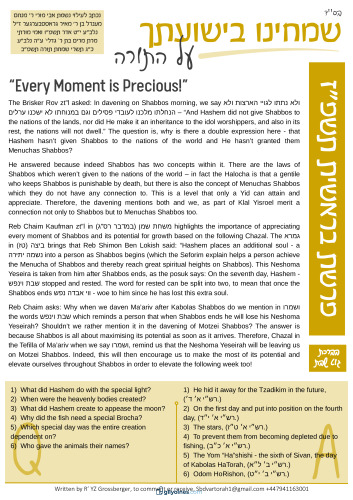
“Every Moment is Precious!”
פר˘˙ ברא˘י˙ ˙שפ״ז
The Brisker Rov zt”l asked: In davening on Shabbos morning, we say ולא נתתו לגויי הארצות ולא
“ – הנחלתו מלכנו לעובדי פסילים וגם במנוחתו לא ישכנו ערליםAnd Hashem did not give Shabbos to
the nations of the lands, nor did He make it an inheritance to the idol worshippers, and also in its
rest, the nations will not dwell.” The question is, why is there a double expression here - that
Hashem hasn’t given Shabbos to the nations of the world and He hasn’t granted them
Menuchas Shabbos?
He answered because indeed Shabbos has two concepts within it. There are the laws of
Shabbos which weren’t given to the nations of the world – in fact the Halocha is that a gentile
who keeps Shabbos is punishable by death, but there is also the concept of Menuchas Shabbos
which they do not have any connection to. This is a level that only a Yid can attain and
appreciate. Therefore, the davening mentions both and we, as part of Klal Yisroel merit a
connection not only to Shabbos but to Menuchas Shabbos too.
Reb Chaim Kaufman zt”l in ( משחת שמן )במדבר רס"גhighlights the importance of appreciating
every moment of Shabbos and its potential for growth based on the following Chazal. The גמרא
in ( ביצה )טזbrings that Reb Shimon Ben Lokish said: “Hashem places an additional soul - a
נשמה יתירהinto a person as Shabbos begins (which the Seforim explain helps a person achieve
the Menucha of Shabbos and thereby reach great spiritual heights on Shabbos). This Neshoma
Yeseira is taken from him after Shabbos ends, as the posuk says: On the seventh day, Hashem -
שבת וינפשstopped and rested. The word for rested can be split into two, to mean that once the
Shabbos ends ווי אבדה נפש- woe to him since he has lost this extra soul.
Reb Chaim asks: Why when we daven Ma’ariv after Kabolas Shabbos do we mention in ושמרו
the words שבת וינפשwhich reminds a person that when Shabbos ends he will lose his Neshoma
Yeseirah? Shouldn’t we rather mention it in the davening of Motzei Shabbos? The answer is
because Shabbos is all about maximising its potential as soon as it arrives. Therefore, Chazal in
the Tefilla of Ma’ariv when we say ושמרו, remind us that the Neshoma Yeseirah will be leaving us
on Motzei Shabbos. Indeed, this will then encourage us to make the most of its potential and בברכת
elevate ourselves throughout Shabbos in order to elevate the following week too! גוט שבת
1) What did Hashem do with the special light? 1) He hid it away for the Tzadikim in the future,
2) When were the heavenly bodies created? (רש״י א׳ ד׳.)
3) What did Hashem create to appease the moon? 2) On the first day and put into position on the fourth
4) Why did the fish need a special Brocha? day, (רש״י א׳ י״ד.)
Q A
5) Which special day was the entire creation 3) The stars, (רש״י א׳ ט״ז.)
dependent on? 4) To prevent them from becoming depleted due to
6) Who gave the animals their names? fishing, (רש״י א׳ כ״ב.)
5) The Yom “Ha”shishi - the sixth of Sivan, the day
of Kabolas HaTorah, (רש״י ב׳ ל״א.)
6) Odom HoRishon, (רש״י ב׳ י״ט.)
Written by R’ YZ Grossberger, to comment or receive, Sbdvartorah1@gmail.com +447941163001